The Ancient Calendar That Tells the Story of Jesus

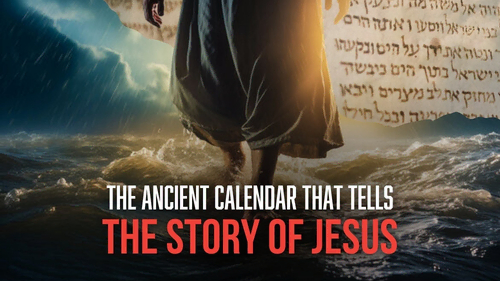
Every year, people mark important dates on their calendars. Birthdays, anniversaries, national holidays, and religious celebrations remind us of significant moments in our lives and history.
But what if God had a calendar of His own?
Not merely a calendar for keeping track of days and seasons, but one designed to tell the story of redemption long before the events themselves took place.
Nearly 3,500 years ago, God gave Israel seven annual feasts. These celebrations were tied to Israel’s agricultural seasons, worship, and national identity. To many modern readers, they may seem like ancient Jewish traditions with little relevance today.
Yet a closer look reveals something remarkable.
These feasts appear to form a prophetic pattern that points directly to Jesus Christ.
Long before Bethlehem, long before Calvary, and long before the empty tomb, God established seven appointed times for His people. Christians have long observed that the first four feasts correspond strikingly with key events in Christ’s first coming.
Passover points to His sacrificial death.
The Feast of Unleavened Bread reflects His sinless life and burial.
Firstfruits points to His resurrection.
Pentecost corresponds with the coming of the Holy Spirit and the birth of the Church.
Whether one views these connections as prophetic fulfillment, divine foreshadowing, or both, the pattern is difficult to ignore. Centuries before Jesus walked the roads of Galilee, God had already embedded reminders of His redemptive plan into Israel’s worship calendar.
Perhaps even more surprising is that the Bible does not introduce these celebrations as “Jewish feasts.”
In Leviticus 23, God calls them “the appointed feasts of the Lord.” They belonged to Him before they belonged to Israel. These were divine appointments established by God Himself.
Imagine receiving an invitation months in advance to an important event. The invitation tells you when to arrive, what to expect, and who will be there. Then, when the day finally comes, everything unfolds exactly as promised.
The biblical feasts function in a similar way. They prepared God’s people for His work long before they fully understood what He was doing.
This is one reason the feasts continue to fascinate Bible students, pastors, and ordinary believers alike. They reveal how the Old and New Testaments are connected. They demonstrate that God’s plan of salvation was not an afterthought. And they remind us that the Bible is one unified story centered on one Savior.
The first four feasts occur in the spring and have clear connections to events surrounding Christ’s first coming. The final three feasts occur in the fall: Trumpets, Atonement, and Tabernacles.
For generations, Christians have studied these fall feasts with great interest. Could they shed light on God’s future purposes? Do they point to events still to come? Faithful believers hold different views on these questions, but all agree on one central truth: history is moving toward the fulfillment of God’s promises and the return of Christ.
Understanding the feasts is not about predicting dates or unlocking secret codes. It is about seeing the beauty of God’s redemptive plan unfold across Scripture. The same God who delivered Israel from Egypt, sent His Son into the world, and raised Him from the dead is still faithfully accomplishing His purposes today.
The seven feasts remind us that God is never improvising. He is the Author of history, working according to His perfect plan.
As these feasts approach this year, many Christians may hear these ancient feasts mentioned and wonder what they mean. Why did God establish them? Why did Jesus fulfill them so precisely? And what do they teach us about God’s plan for the future?
Those questions are worth exploring.
This article begins our special series, Jesus in the Feasts: Discovering Christ in God’s Appointed Times.
Over the coming weeks, we will journey through each of the seven biblical feasts, from Passover to Tabernacles, examining their origins, their significance in Israel’s history, and most importantly, how they point us to Jesus Christ.
You may discover that these ancient celebrations are far more than historical observances. They are signposts placed throughout Scripture, directing our eyes to the Lamb, the King, and the Savior at the center of God’s story.
Thank you for your support.
If you appreciate the work we do to spread the good news of Jesus Christ, please consider giving a gift to help us continue this work. Maranatha!
Click an icon below to share this post.
All articles, including blogs and guest articles, published on Revival Nation News are owned by Revival Nation and Revival Nation News. The use of any content created and published by Revival Nation News may be quoted but attribution is required.
Portions of Revival Nation News articles may be used for reprint and republish purposes, but Revival Nation News MUST BE CREDITED.
All reprinted or republished articles must:
(1) Identify the author of the article.
(2) Contain the Revival Nation News byline at the beginning of the article and a hyperlink “Revival Nation News” to the respective article on the Revival Nation News website.
(3) Contain, at maximum, three paragraphs and then link back to the original article.

You might also like


Explore Categories