Should We Give to Get?


“Give to give. Don’t give to get.”
It sounds spiritual, doesn’t it? It has that humble, pious ring to it… the kind of statement that makes you want to nod along without really examining it. It’s usually followed by assuming and impugning the motives of those who believe in biblical sowing and reaping.
The depth of this kind of thinking is about a mile wide and an inch thick, and it’s not Bible. What does the Bible actually say?
This is the Apostle Paul writing to the Corinthian church:
“Remember this: Whoever sows sparingly will also reap sparingly, and whoever sows generously will also reap generously.” 2 Corinthians 9:6
Paul didn’t accidentally stumble into an agricultural metaphor. This is how the Holy Spirit looks at giving. He deliberately uses the imagery of farming, of seed and soil and harvest, to explain how giving works in the Kingdom. And notice: he promised a harvest to those who sow. The entire passage from 2 Corinthians 9:6-11 describes God multiplying what is given, enriching the giver, and producing a harvest of righteousness.
So if you want to take the “give to give, don’t give to get” logic to its conclusion, you’d have to rephrase it this way:
“Sow to sow. Don’t sow to reap.”
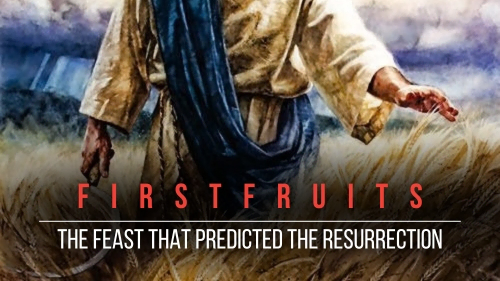
Say that out loud. Does any farmer on the planet operate that way? Does anyone scatter seed into the ground with zero expectation that it will grow? Of course not. Every farmer sows with the harvest in mind. This does not make him greedy. This makes him a good steward.
The more a farmer desires to give away food, share with the poor, bless his community, and provide for his family, the more he will tend to the reproduction of his seed. He’ll prepare the soil. He’ll water. He’ll pray for rain. He’ll watch the skies and protect from pests. Why? Because he understands that without a harvest, there is nothing to give. It would be selfish not to expect a return.
If you “give to give” with no expectation of return, no faith in multiplication, no looking for the Lord’s increase, what have you actually done? You’ve thrown a rock, not planted a seed. A rock requires no faith, no tending, no partnership with the Creator. But a seed? A seed carries potential. The difference between a rock and a seed is EXPECTATION. It operates on divine law, the same law Paul referenced when he wrote:
“Do not be deceived: God is not mocked, for whatever one sows, that will he also reap.” Galatians 6:7
The context of Galatians 6:6-10 includes sharing material goods with those who teach the Word. Paul was receiving an offering and was explaining that financial sowing produces a spiritual and material harvest. It’s a biblical principle, woven into the fabric of creation. Here in Galatians 6 Paul says to not expect a harvest is the same as mocking God.
Faith expects reward. Hebrews 11:6 tells us:
“Without faith it is impossible to please Him, for he who comes to God must believe that He is, and that He is a rewarder of those who diligently seek Him.” Hebrews 11:6
Did you catch that? You cannot please God without believing He is a rewarder.
Faith, by its very nature, carries expectation. Faith anticipates. Faith looks forward to what God has promised. If you give with zero expectation, you give no honor to the One who is the Lord of the Harvest. When you sow financially with faith in the One who can multiply your seed, you pray over it, you water it with thanksgiving, you anticipate multiplication not because you’re greedy, but because you trust the Lord of the Harvest.
Think about it: if you never expect a harvest, what happens when God blesses you? You don’t connect it and you don’t recognize His faithfulness. You don’t offer Him thanksgiving for multiplication. In other words, “give to give with no expectation of return” theology produces a heart that sees fewer harvests and therefore builds monuments of unthankfulness.
The farmer who expects nothing? He’s not watching. When the stalks break through the soil, he doesn’t even notice. When the grain fills the ear, he’s not paying attention. And when harvest time comes? He’s unprepared, unaware, and ungrateful. But the farmer who sowed in faith? He’s been watching every day. He’s been thanking God for every sign of growth. When the harvest comes in, his heart overflows with gratitude and he immediately thinks about how he can sow even more generously next season.
This is biblical prosperity.
Why Do People Say “Don’t Give to Get”?
So why would anyone teach something so easily refuted by Scripture? Usually for one of three reasons:
1) They’re overcorrecting. They’ve seen genuine and perceived abuses of prosperity teaching, manipulative tactics, empty promises, or greedy motivations and they’ve swung the pendulum so far in the other direction that they’ve created an even greater error. They’re so afraid of greed that they’ve abandoned faith.
2) They’re projecting. Sometimes the people most suspicious of others’ motives are dealing with their own. They assume everyone who gives expecting a return must be doing so from selfish ambition because that’s the only motivation they can imagine.
3) They haven’t studied the Word. Nowhere in Scripture does God tell us to “give to give.” That phrase isn’t in your Bible. But here’s what is in your Bible:
- “Whoever sows sparingly will also reap sparingly, and whoever sows generously will also reap generously.” 2 Corinthians 9
- “Do not be deceived: God is not mocked, for whatever one sows, that will he also reap.” Galatians 6:7
- “Let us not grow weary in doing good, for at the proper time we will reap a harvest if we do not give up.” Galatians 6:9
- “One person gives freely, yet gains even more; another withholds unduly, but comes to poverty. A generous person will prosper; whoever refreshes others will be refreshed.” Proverbs 11:24-25
- “Give, and it will be given to you. A good measure, pressed down, shaken together and running over, will be poured into your lap. For with the measure you use, it will be measured to you.” Luke 6:38
- “And God is able to bless you abundantly, so that in all things at all times, having all that you need, you will abound in every good work.” 2 Corinthians 9:8
- “Now he who supplies seed to the sower and bread for food will also supply and increase your store of seed and will enlarge the harvest of your righteousness.” 2 Corinthians 9:10
- “And my God will meet all your needs according to the riches of his glory in Christ Jesus.” Philippians 4:19 (in the context of those who gave financially)
- “Truly I tell you, no one who has left home or brothers or sisters or mother or father or children or fields for me and the gospel will fail to receive a hundred times as much in this present age… and in the age to come eternal life.” Mark 10:29-30
- “Bring the whole tithe into the storehouse, that there may be food in my house. Test me in this,” says the LORD Almighty, “and see if I will not throw open the floodgates of heaven and pour out so much blessing that there will not be room enough to store it.” Malachi 3:10
There are so many more verses about this!
WHY vs. HOW
What many who haven’t studied this subject often confuse is the difference between the “why” and the “how” of giving. WHY we give is our motive. HOW we give is the method. Both must align with Scripture, but they are not the same thing.
No one should expect to receive anything from God with an impure motive. James made this clear:
“You ask and do not receive, because you ask wrongly, to spend it on your passions” (James 4:3).
If your heart is set on consuming God’s blessings for selfish indulgence, you’ve disqualified yourself before you even begin. Motive matters. God sees the heart.
But here’s where the confusion sets in: Just because wrong motives disqualify someone doesn’t mean expectation itself is wrong. Scripture never tells us to give and expect nothing from God.
Not once.
In fact, the opposite is true, God commands us to give and then piles up mountains of promises concerning what He will do in return. Why would He do that? Because He wants us to give with expectation. This honors Him. It demonstrates that we actually believe His Word.
Here’s the key distinction: We’re not expecting selfishly FOR us. We’re giving expecting FROM Him. It’s not FOR our carnal desires to be granted, it’s FROM Him that we expect blessing to flow according to His Word. We give because we love the Lord and want to obey Him. That’s our “why.” But “how” we give must also align with Scripture and Scripture requires faith-filled expectation, not passive indifference.
And let’s be clear: the blessings God promises in return for faithful giving are both spiritual and physical. Paul told the Corinthians they would be “enriched in every way” so they could be generous on every occasion (2 Corinthians 9:11), that includes material provision. But he also spoke of an “enlarging harvest of righteousness” (2 Corinthians 9:10), that’s spiritual fruit. God isn’t limited to one category, and neither should our expectation be. He blesses the whole person: spirit, soul, and body.
Either way, to give without expectation is to give without faith. And without faith, it is impossible to please Him.
So the next time someone says, “don’t give to get,” you can lovingly respond: “That sounds spiritual, but it’s not biblical.”
The Bible teaches us to give in faith, trusting that God is a rewarder. It teaches us to sow expecting a harvest, knowing that the Lord multiplies seed sown in good soil. It teaches us to give generously, confident that we will reap generously in return.
So go ahead, sow your seed. Pray over it. Water it. Watch for the harvest. And when it comes in? Give thanks to the Lord of the Harvest, and prepare to sow even more.
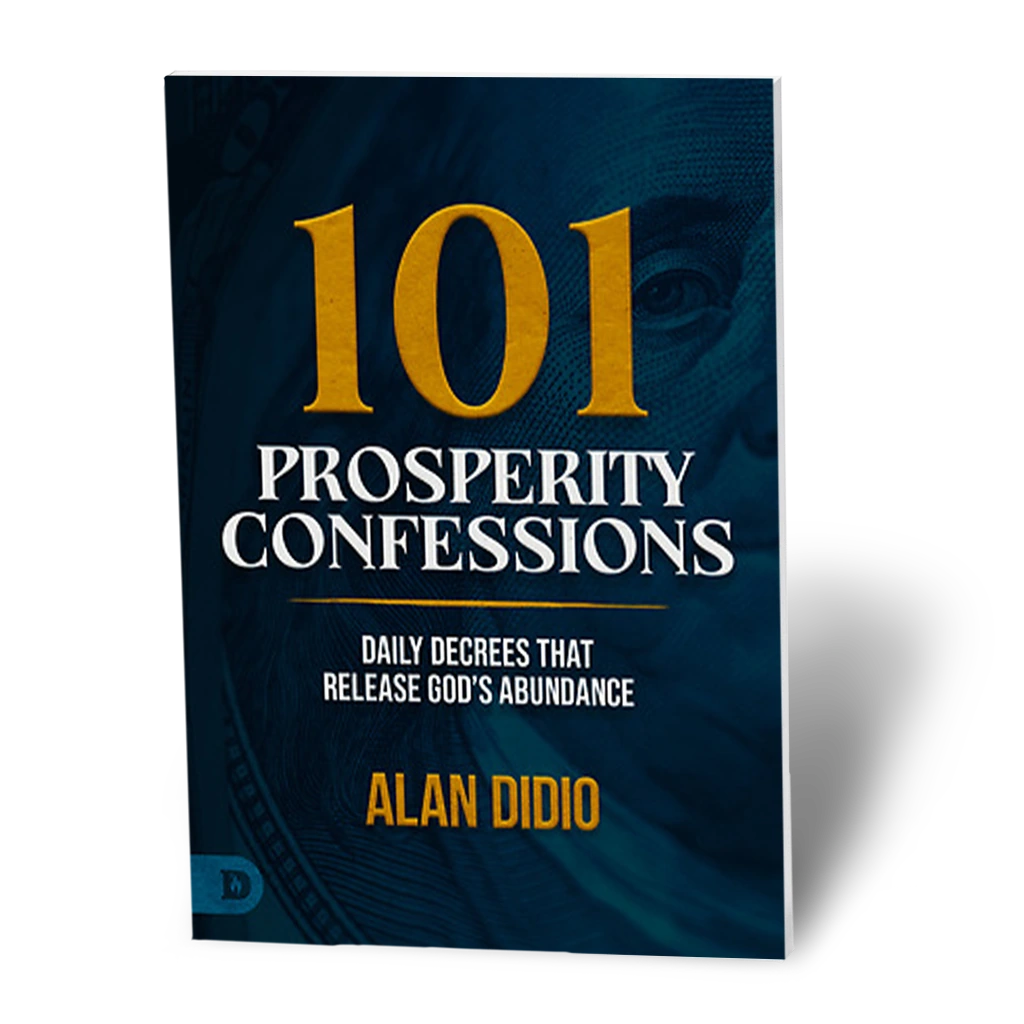
MORE FROM BISHOP ALAN DIDIO
Explore more prophetic and theological insights from Bishop Alan DiDio by following him on social media, subscribing to Revival Nation on YouTube or reading other posts by him.
CLICK HERE for more posts by Bishop Alan DiDio.
Thank you for your support.
If you appreciate the work we do to spread the good news of Jesus Christ, please consider giving a gift to help us continue this work. Maranatha!
Click an icon below to share this post.
All articles, including blogs and guest articles, published on Revival Nation News are owned by Revival Nation and Revival Nation News. The use of any content created and published by Revival Nation News may be quoted but attribution is required.
Portions of Revival Nation News articles may be used for reprint and republish purposes, but Revival Nation News MUST BE CREDITED.
All reprinted or republished articles must:
(1) Identify the author of the article.
(2) Contain the Revival Nation News byline at the beginning of the article and a hyperlink “Revival Nation News” to the respective article on the Revival Nation News website.
(3) Contain, at maximum, three paragraphs and then link back to the original article.