AI-Driven Security Race Could Bring Prolonged Digital Instability

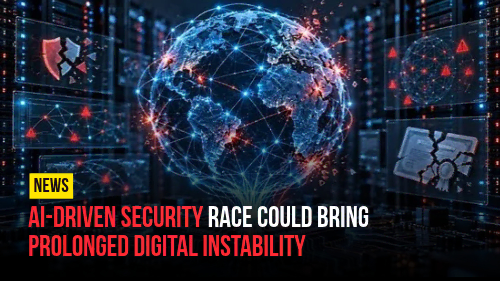
A wave of technology outages affecting aviation, banking, government communications, and major corporate platforms has raised new questions about the resilience of America’s increasingly interconnected infrastructure.
Beginning Nov. 12, at least seven significant disruptions were reported within seven days. The affected systems reportedly included Microsoft Outlook and Teams, Apple services, Marriott, major banks, and internal communications at the National Security Agency. A failure involving the Federal Aviation Administration’s communications network also grounded flights nationwide for nearly five hours.
The timing prompted fears that China, Iran, Russia, or another hostile power could be conducting a coordinated cyberattack. Federal officials, however, said their investigations had not uncovered evidence supporting that conclusion.
Director of National Intelligence Jay Clayton told a House Homeland Security Committee hearing that the incidents appeared to be separate outages associated with maintenance and technical changes. Homeland Security Secretary Markwayne Mullin likewise said he was “98 percent confident” that foreign adversaries were not responsible.
The larger concern may be the speed at which artificial intelligence can now uncover software flaws. Companies facing a rapidly expanding list of vulnerabilities may be forced to issue security patches before they have been adequately tested. Those rushed updates can fail, interrupt services, and trigger problems across connected industries.
John Hultquist, chief analyst at Google Threat Intelligence Group, said organizations may increasingly face a difficult choice: temporarily shut down critical systems or leave them exposed while repairs are prepared.
Microsoft CEO Satya Nadella also warned that global infrastructure could enter an extended period of instability. Transportation, heating, cooling, and other internet-connected systems can be especially difficult to update without interrupting essential operations.
The danger is not theoretical. Recent cyberattacks reportedly manipulated refrigeration systems at European supermarkets, causing temperatures to rise and food to spoil. French authorities have investigated whether individuals linked to Iran’s Islamic Revolutionary Guard Corps were involved.
Sen. Rick Scott said public concern is understandable and called on government agencies and affected companies to communicate openly. While encouraging Americans to consider the current findings of federal investigators, he warned that hostile nations continue searching for ways to penetrate U.S. infrastructure.
The latest disruptions may not have been coordinated attacks, but they expose a sobering reality: as AI accelerates both cybersecurity and exploitation, outages may become a recurring cost of keeping digital systems secure.
Thank you for your support.
If you appreciate the work we do to spread the good news of Jesus Christ, please consider giving a gift to help us continue this work. Maranatha!
Click an icon below to share this post.
All articles, including blogs and guest articles, published on Revival Nation News are owned by Revival Nation and Revival Nation News. The use of any content created and published by Revival Nation News may be quoted but attribution is required.
Portions of Revival Nation News articles may be used for reprint and republish purposes, but Revival Nation News MUST BE CREDITED.
All reprinted or republished articles must:
(1) Identify the author of the article.
(2) Contain the Revival Nation News byline at the beginning of the article and a hyperlink “Revival Nation News” to the respective article on the Revival Nation News website.
(3) Contain, at maximum, three paragraphs and then link back to the original article.