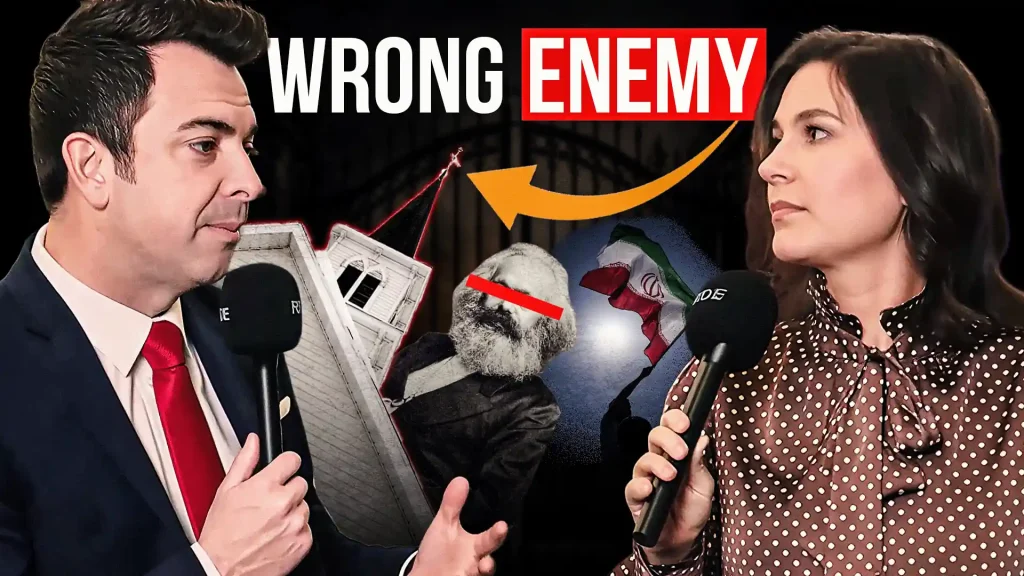
Is Canada Becoming America’s 51st State? | Ron Coleman & Derek Sloan

Is Canada Becoming America’s 51st State?
Bigger Than a Headline. Bigger Than a Joke.
*What started as political rhetoric opened up a much bigger conversation about sovereignty, trade, culture, and the future of North America.*
When comments about Canada potentially becoming America’s “51st state” began making headlines, reactions ranged from humor to outrage to genuine concern. But behind the speculation sits a bigger question: what does the conversation reveal about the relationship between Canada and the United States today?
In this discussion, Mattea Merta sits down with legal voices from both sides of the border, Ron Coleman and Derek Sloan, to unpack what could legally happen, what realistically would not happen, and what deeper issues may actually be driving the conversation.
Could Canada Actually Become America’s 51st State?
Legally speaking, both guests agree: not anytime soon.
Sloan explains that Canada’s constitutional structure would make such a move extraordinarily difficult. Canada’s provinces and territories maintain their own governmental systems, meaning a change of that magnitude would require broad agreement across provincial legislatures alongside federal approval. Even if public opinion dramatically shifted overnight, the legal process alone would take years.
Coleman echoes that reality from the American side, arguing that even in a hypothetical world where both nations wanted unification, the practical challenges would be enormous. Integrating governments, economies, and systems would be far more complicated than internet discussions often suggest.
Is This About Politics or Strategy?
One of the strongest themes throughout the conversation is that public political statements are not always literal.
Coleman argues that much of the rhetoric surrounding Canada becoming a state should be viewed through the lens of political messaging and disruption rather than formal policy ambition. Sloan agrees that while a full merger appears highly unlikely, major public statements often serve another purpose: forcing broader conversations about alliances, economics, and national priorities.
That larger conversation reveals just how interconnected both countries already are.
America and Canada Are More Connected Than Most People Realize
Trade relationships between Canada and the United States already operate on an enormous scale.
The discussion highlights how deeply integrated both nations are economically, militarily, and strategically. Canada provides major energy resources to the United States. Manufacturing supply chains overlap. Defense cooperation already exists through longstanding partnerships and agreements. NATO collaboration and continental defense partnerships have tied both countries together for decades.
The picture painted throughout the interview is clear: the relationship already functions closer than many people realize.
A Different Kind of Partnership
While neither guest sees formal annexation as realistic, both entertain the possibility of stronger cooperation.
Ideas discussed include expanded employment pathways, economic coordination, and deeper collaboration while maintaining national sovereignty. Sloan raises the possibility that North America could eventually benefit from forms of partnership that increase opportunity without eliminating borders or identity. Coleman agrees that stronger cooperation may ultimately benefit both nations while preserving independence.
The discussion moves beyond political slogans into a larger question: what should healthy alliance actually look like?
Why This Conversation Resonates So Deeply
Part of why this topic captured attention is because it touches something bigger than policy.
People are increasingly questioning institutions, leadership structures, and whether traditional systems are serving citizens well. The conversation explores how anti-establishment movements, political disruption, and shifting global dynamics are reshaping public conversations across the Western world.
Political language that once would have been dismissed immediately now generates serious public discussion because people sense broader change already happening beneath the surface.
The Future May Not Look Like the Past
One point repeated throughout the interview stands out clearly: impossible ideas sometimes stay impossible until suddenly they are not.
Neither guest believes Canada becoming the 51st state is realistic under current conditions. But both acknowledge that global politics is moving faster than many expected, creating conversations that previously would have never reached mainstream discussion.
That reality makes understanding policy, leadership, and international relationships more important than ever.
Watch the Full Conversation
This article captures key moments, but the full discussion dives deeper into legal frameworks, political strategy, trade realities, and the evolving relationship between two of the closest allies in the world. Watch the full interview to hear both perspectives directly and explore the broader implications for North America’s future.
The Informed Steward
Conversations like this remind believers and citizens alike that leadership decisions matter. International relationships shape economies, families, opportunities, and long-term stability.
Staying informed is not fear-driven. It is stewardship.
Understanding the issues shaping nations helps people engage wisely, pray intentionally, and think critically about the future.
Unshaken Foundations
The world is changing quickly as political systems shift, alliances evolve, and new challenges emerge.
But wisdom, truth, and leadership still matters and even in moments of uncertainty, God remains firmly in control when we submit to Him.
Nations rise and nations change, but the foundation believers stand on remains unshaken.
SUPPORT MATTEA’S WORK
- Tune into The Mattea Merta Podcast
- Follow her on Twitter and Instagram
- Fund the mission through CashApp or PayPal: @matteamerta
CLICK HERE for more posts by Mattea Merta.
Thank you for your support.
If you appreciate the work we do to spread the good news of Jesus Christ, please consider giving a gift to help us continue this work. Maranatha!
Click an icon below to share this post.



All articles, including blogs and guest articles, published on Revival Nation News are owned by Revival Nation and Revival Nation News. The use of any content created and published by Revival Nation News may be quoted but attribution is required.
Portions of Revival Nation News articles may be used for reprint and republish purposes, but Revival Nation News MUST BE CREDITED.
All reprinted or republished articles must:
(1) Identify the author of the article.
(2) Contain the Revival Nation News byline at the beginning of the article and a hyperlink “Revival Nation News” to the respective article on the Revival Nation News website.
(3) Contain, at maximum, three paragraphs and then link back to the original article.

You might also like



Explore Categories